Health and Safety Policy for Cleaners NW6
 This health and safety policy sets out the standards expected from cleaners NW6 when carrying out domestic and commercial cleaning tasks. Its purpose is to protect staff, clients, visitors, and anyone else who may be affected by cleaning activities. A safe working approach helps ensure that every cleaning service is delivered responsibly, efficiently, and with care.
Our policy applies to all cleaning operations, including regular maintenance cleans, deep cleans, end-of-tenancy work, and specialist surface care. It covers safe use of equipment, handling of chemicals, manual handling, hygiene practices, and the reporting of incidents. Safety is treated as an essential part of quality, not as a separate step.
 All members of the cleaning team are expected to follow agreed procedures, work attentively, and remain alert to risks in each environment. Every property has different conditions, so a cleaner’s judgement is important when identifying hazards such as wet floors, loose cables, fragile items, or poorly ventilated areas. The aim is to reduce avoidable accidents while maintaining a high standard of cleanliness.
Core Responsibilities
Managers and supervisors are responsible for providing suitable instruction, safe systems of work, and appropriate equipment for the tasks assigned. Workers must use the equipment correctly, wear any required protective items, and report concerns promptly. Clients and occupiers also play a role by informing the cleaning team of known hazards, access restrictions, alarm systems, or sensitive materials before work begins.
Every cleaner should understand the importance of personal responsibility. Cleaners in NW6 must not take unnecessary risks, improvise with unsafe methods, or use products without checking instructions. If a task appears hazardous, it should be paused until the risk has been assessed and controlled. When in doubt, the safer option must always be chosen.
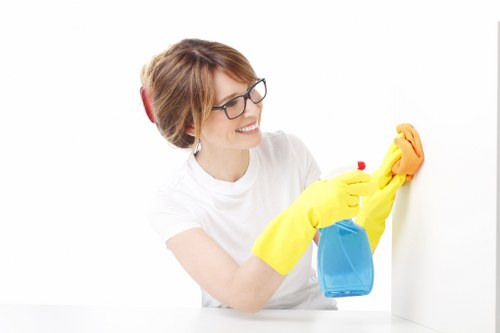 Training is a key part of maintaining a safe service. Staff should be trained in the correct use of tools, safe dilution of cleaning products, spill response, basic first aid awareness, and emergency procedures. Refresher training should be provided when processes change or when new equipment is introduced. Knowledge and consistency support both safety and performance.
Safe Working Practices
Cleaning products must be stored, labelled, and handled according to manufacturer instructions. Where possible, products should be used in well-ventilated areas and never mixed unless specifically approved. Gloves, masks, or other protective items should be worn when required by the task. Good housekeeping is also important: spills should be cleaned quickly, and containers should be closed properly after use.
Manual handling is another major consideration. Lifting heavy bags, moving furniture, or carrying equipment up stairs can create strain or injury if done carelessly. Cleaners NW6 should assess the load before lifting, use safe posture, and request assistance when needed. Trolleys and lighter equipment should be used where practical to reduce physical stress.
Electrical safety must also be observed. Equipment should be checked for damage before use, and faulty items must not be operated. Cables should be positioned to avoid trips, and electrical devices should be kept away from water unless designed for such conditions. Preventing slips, trips, and falls is a daily priority, especially in busy or occupied premises.
Incident Reporting and Emergency Response
Any accident, near miss, spill, injury, or unsafe condition must be reported as soon as possible. Prompt reporting allows action to be taken before a small issue becomes a serious one. Records should be kept where appropriate so that patterns can be identified and future risks reduced. A responsible cleaning operation learns from incidents rather than ignoring them.
In the event of an emergency, cleaners should follow the site’s procedures and leave the area if required. Fire alarms, evacuation routes, and assembly points should be respected at all times. If a chemical exposure, breakage, or injury occurs, the team should respond calmly, seek help, and avoid further exposure. Fast and clear communication is essential in these situations.
 Health and safety also includes protecting the wellbeing of the cleaning team. Reasonable workloads, suitable rest breaks, and proper scheduling help reduce fatigue and improve concentration. Fatigue can lead to mistakes, so planning work realistically is part of a safe system. Cleaners NW6 should feel able to raise concerns if conditions make the task unsafe or unnecessarily difficult.
Monitoring, Review, and Continuous Improvement
The policy should be reviewed regularly to make sure it remains effective and relevant. Changes in equipment, cleaning products, client requirements, or work environments may require updates to procedures. Supervisors should monitor compliance through observation, communication, and periodic checks. Safety standards must remain active in day-to-day practice, not just on paper.
Improvements should be made whenever better methods are identified. This may include replacing worn equipment, improving storage arrangements, refining task schedules, or updating training materials. By reviewing how work is performed, the service can maintain high standards while reducing the likelihood of incidents. A careful approach benefits both cleaners and the people whose properties are cleaned.
 In summary, this policy supports a professional and accountable approach to cleaning services. It reinforces the need for awareness, safe technique, proper training, and prompt reporting. When these principles are followed consistently, cleaning in NW6 can be carried out safely, efficiently, and with confidence.